 Reader Writer
What to Do After a Disappointing IGCSE Mock Result
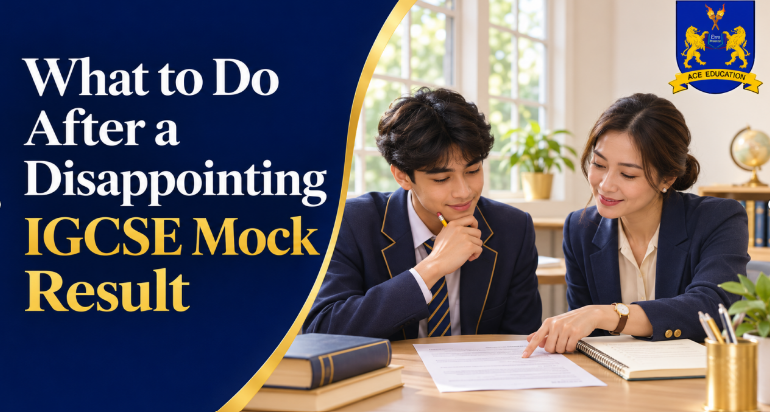
The moment a mock result arrives is rarely the best moment to design an entire revision strategy. A student may feel embarrassed or defensive; a parent may want to solve the problem immediately.
Allow some space, then return to the paper with a practical purpose. The result tells you where performance fell short on that assessment. The answers can help explain what to work on next.
Start with the student’s account
Ask what felt difficult before offering a solution. Did the learner run out of time, struggle to recall content or feel uncertain about what questions required?
Listen without treating the explanation as a complete diagnosis. Compare it with the work. A student may remember the final unanswered page but overlook conceptual errors earlier in the paper.
The aim is to combine their experience with evidence, rather than decide who is responsible for the mark.
Review a useful sample of errors
Choose representative questions instead of discussing every mistake at once. Look for differences between missing knowledge, a misunderstood instruction, an unsuitable method and an incomplete explanation.
Check whether an answer the student considered “careless” reflects a repeated habit. If units or signs are often lost, the follow-up needs to include a checking process.
Ask the subject teacher about any judgement you do not understand. A mark scheme can support review, but the learner still needs to understand the reasoning behind a correction.
Select priorities that can change the work
A recovery plan should name an action. “Work harder in physics” is difficult to follow. “Review the relationship in this topic, then explain it using two unfamiliar examples” gives the session a purpose.
Choose priorities according to the learner’s gaps and syllabus, not speculation about which topics will appear next time.
Avoid rebuilding every subject timetable in one evening. Address a manageable set of problems and leave a review point where the plan can change.
Recheck with fresh questions
An answer repeated immediately after correction may reflect memory of the solution. Later, use a different question requiring the same skill.
Ask the student to explain the approach. Notice whether they can start with less support and whether the original error returns.
Use appropriate current materials. Cambridge’s revision resources explain the role of papers, mark schemes and learner guides; students on another board should use that board’s guidance.
Decide whether extra teaching has a specific role
Some gaps need explanation rather than another independent worksheet. If additional support is being considered, bring the assessment and describe the priority clearly.
Families can review ACE Education Malaysia’s IGCSE support and ask what initial teaching would focus on. An extra lesson should fit the recovery plan, not simply fill another evening.
Protect time for normal schoolwork, practice and rest. Ask what can be adjusted before adding more commitments.
At the next review, discuss what the student can now do and what still needs help. The useful response to a mock result is a change in learning activity supported by evidence, rather than repeated conversations about the original grade.