 Reader Writer
What It Feels Like to Play a Game Created in Minutes
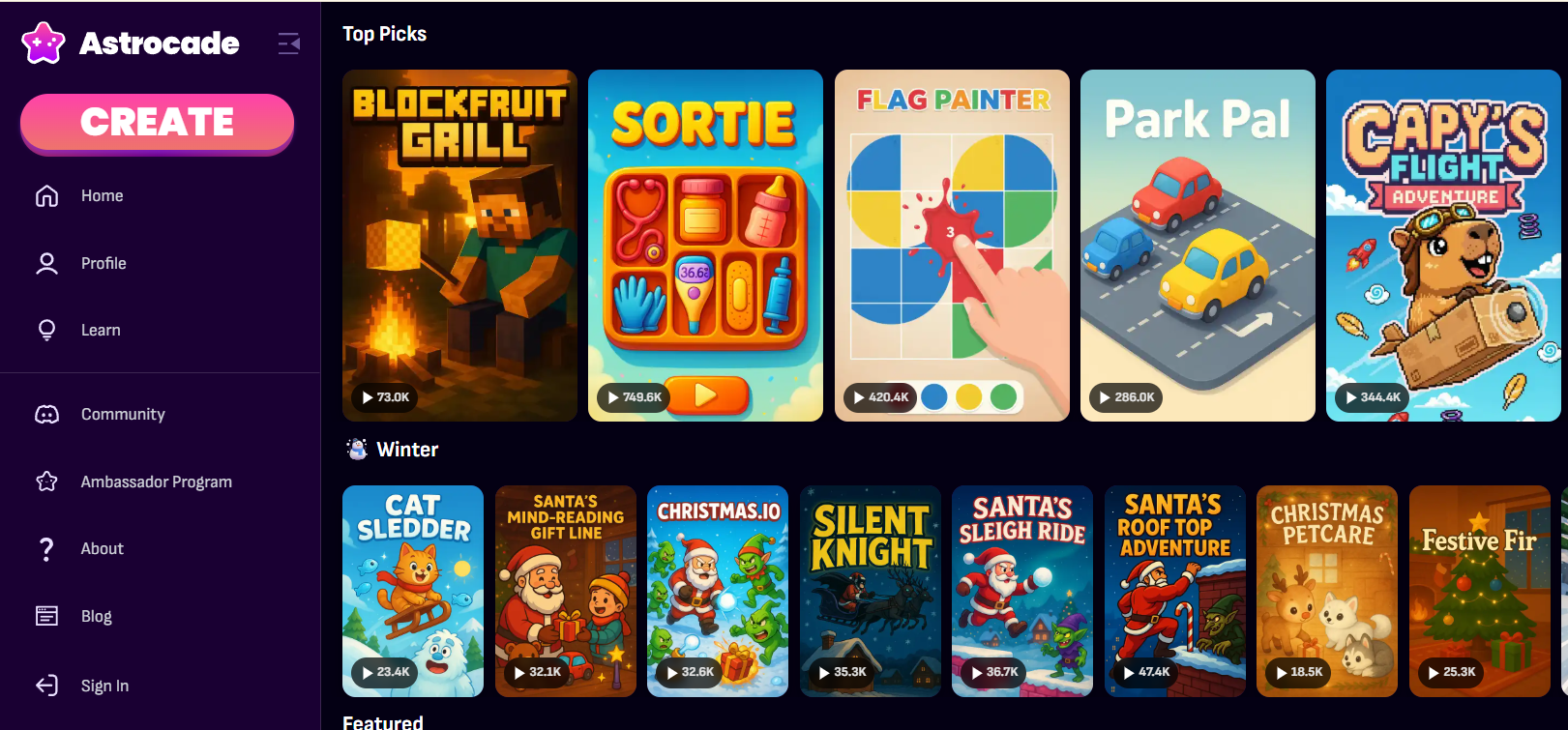
There’s a noticeable shift happening in gaming one that most players feel before they fully understand it.
You open a game, expecting something basic because it was created quickly. But within minutes, you’re focused, engaged, and strangely invested. Not because the game is massive or visually complex, but because it feels immediate, responsive, and surprisingly well-tuned.
That’s the experience of playing a game built in minutes.
And it’s redefining how we think about quality in modern games.
The New Kind of First Impression
Traditionally, games were judged by scale graphics, size, development time. A game built quickly would have been dismissed as shallow.
That assumption no longer holds.
Today’s fast-built AI games often skip unnecessary complexity and go straight to interaction. You’re not navigating menus or waiting through long introductions. You’re already playing, already making decisions.
This creates a different kind of first impression—one based on doing, not waiting.
Speed Changes Player Expectations
The rise of online game no download formats has trained players to expect instant access. If a game takes too long to start, it risks being abandoned before it even begins.
Quickly created games fit perfectly into this expectation:
- no installation
- no setup
- no commitment barrier
This is one reason online free games continue to dominate user engagement. They respect the player’s time from the very first second.
Simplicity Becomes the Core Experience
When a game is created in minutes, it cannot rely on massive systems or deep narratives.
Instead, it focuses on one thing:
- a clear mechanic
- a repeatable action
- a satisfying loop
This is where many casual games outperform larger titles.
They don’t try to do everything. They do one thing well.
And that clarity makes them easier to understand, easier to replay, and easier to share.
The Feeling of Continuous Discovery
What makes these games interesting is not just how quickly they are made—but how they behave.
Many modern AI games introduce small variations:
- slightly different level layouts
- changing patterns
- evolving difficulty
So even if the concept is simple, the experience doesn’t feel static.
This creates a subtle sense of discovery. You’re not just repeating actions—you’re adjusting, improving, and exploring within a limited system.
Why These Games Spread So Quickly
Fast-built games often become viral games not because they are perfect, but because they are accessible.
Anyone can:
- start instantly
- understand the objective within seconds
- share the experience without explanation
On a social gaming platform, this accessibility becomes even more powerful. Players can recommend a game, and others can try it immediately—no friction, no delay.
This is also why many users choose to play with friends online in short bursts rather than commit to longer sessions.
Where Quick Creation Meets Smart Design
The idea that speed reduces quality is being challenged.
In reality, faster creation often forces better design decisions:
- remove unnecessary features
- focus on player interaction
- refine the core loop
This leads to games that feel clean, responsive, and surprisingly engaging.
The experience is not about how long the game took to build—it’s about how effectively it captures attention.
A Clear Example of Focused Design: Turf Trim
A good way to understand this design philosophy is through a game like Turf Trim.
At first glance, the concept is simple: mowing lawns. But the execution turns that simplicity into something far more engaging.
Players navigate different yard layouts, cutting grass while avoiding obstacles. The goal is not just completion—it’s efficiency. Every movement matters, and unnecessary actions reduce your performance.
As the levels progress:
- layouts become more complex
- planning becomes essential
- precision becomes the main challenge
What makes it stand out is how it transforms a familiar real-world task into a structured, almost strategic experience.
There’s also a strong visual reward. Watching clean patterns form as you complete a level creates a sense of satisfaction that keeps players engaged.
This is where many fast-built games succeed.
They take something simple, refine it, and present it in a way that feels both relaxing and mentally engaging. It’s not overwhelming, but it’s not mindless either.
That balance is what drives repeat play—and why players return.
Rethinking What “Quality” Means in Games
The idea that a game must be large to be valuable is becoming outdated.
Today’s players are responding more to:
- responsiveness
- clarity
- accessibility
Not just scale.
Short, well-designed online games often deliver a better moment-to-moment experience than larger, slower alternatives.
Final Thoughts
Playing a game created in minutes feels different because it removes everything that slows you down.
There’s no waiting, no confusion, no unnecessary layers—just immediate interaction and continuous feedback.
That’s why these games are not just surviving—they’re growing.
As technology continues to evolve, especially with the influence of AI games, the gap between “quickly made” and “deeply engaging” is disappearing.
And for players, that means one thing:
Less time starting a game, and more time actually enjoying it.