 Reader Writer
How to Score 300+ in Sociology Optional UPSC
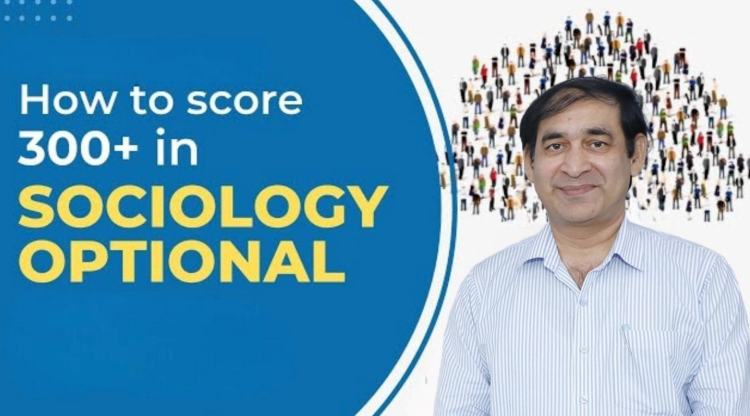
Sociology Optional continues to remain one of the most popular and high-scoring subjects in the UPSC Civil Services Examination. Every year, several toppers secure exceptional marks in Sociology because of its concise syllabus, overlap with General Studies, relevance in Essay, and direct connection with contemporary social issues. Unlike many technical optionals, Sociology rewards conceptual clarity, analytical thinking, and strong answer presentation. Students who understand the subject sociologically rather than mechanically often perform far better in the examination.
However, scoring 300+ in Sociology Optional is not simply about reading standard books or collecting notes. It requires a structured preparation strategy, disciplined revision, regular answer writing, and continuous evaluation. This is why many serious aspirants search for the best coaching for sociology optional to gain proper guidance and expert mentorship. According to Bibhash Sharma, Sociology Optional mentor at Elite IAS, students who consistently improve answer quality and develop sociological thinking are the ones who ultimately cross the 300-mark barrier.
If you genuinely want to understand How to Score 300+ in Sociology Optional, you must move beyond random preparation and adopt a focused, result-oriented approach.
Understand What UPSC Wants in Sociology Optional
One of the biggest mistakes aspirants make is treating Sociology like a purely theoretical humanities subject. UPSC does not reward textbook reproduction. The examination tests your ability to analyze social realities through a sociological lens. The examiner expects analytical thinking, conceptual understanding, sociological interpretation, and the ability to interlink theory with current affairs.
For instance, if UPSC asks a question on caste mobility, a generic answer discussing caste alone will not fetch high marks. A strong answer should incorporate thinkers like M.N. Srinivas, concepts such as Sanskritization, and contemporary examples related to urbanization, education, and changing social structures. This analytical depth is what differentiates average answers from high-scoring ones.
A successful sociology optional strategy is always based on understanding concepts and applying them intelligently rather than memorizing definitions blindly.
Build Strong Paper 1 Fundamentals
Paper 1 forms the conceptual backbone of Sociology Optional. Students who struggle in Paper 1 usually find it difficult to cross 300 overall. This paper demands clarity in sociological theories, thinkers, research methods, stratification, and sociological concepts.
The preparation should begin with major thinkers like Karl Marx, Max Weber, Emile Durkheim, Talcott Parsons, and Robert K. Merton. Instead of memorizing isolated theories, students should understand the core ideas, criticism, relevance, and practical application of these thinkers. Marx can be connected with capitalism and economic inequality, Weber with bureaucracy and rationalization, and Durkheim with social solidarity and modern social isolation. Such interlinking significantly enriches answers.
Similarly, sociological theories like Functionalism, Conflict Theory, Symbolic Interactionism, and Feminist perspectives must be revised multiple times. UPSC repeatedly frames conceptual questions around these theories in different forms. A student with strong conceptual clarity can handle even unconventional questions confidently.
Research methodology is another area that many aspirants neglect because it appears technical. This is a serious mistake. Topics like positivism, fact-value debate, ethnography, surveys, and questionnaire methods are highly scoring when prepared properly. Students who write these answers with clarity and examples often gain an edge.
Indian sociologists also deserve serious attention. Thinkers like G.S. Ghurye, M.N. Srinivas, A.R. Desai, and Yogendra Singh should be prepared with both theoretical understanding and contemporary relevance. Good sociology optional notes should always include definitions, thinker perspectives, examples, criticism, and modern applications instead of becoming bulky collections of copied material.
Master Paper 2 with Current Affairs Integration
Paper 2 is dynamic and deeply connected with Indian society. This is where current affairs become extremely important. Students who intelligently integrate newspaper examples, government reports, and recent developments into their answers generally score better than those writing static content.
Topics like caste, religion, regionalism, gender, globalization, agrarian distress, and social movements should never be studied in isolation. They must be connected with current developments. For example, discussions on women’s empowerment can be linked with feminist sociology and the Women’s Reservation Act. Agrarian protests can be analyzed through agrarian sociology and class conflict perspectives. Similarly, social media polarization can be connected with identity politics and symbolic interactionism.
Government reports, NCRB statistics, NFHS findings, census data, and NITI Aayog reports provide valuable content enrichment. Such examples add authenticity and sociological depth to answers.
In sociology optional paper 1 and paper 2 preparation, balance is crucial. Paper 1 builds conceptual strength, while Paper 2 tests the practical application of sociological understanding.
The Real Secret Behind 300+ Marks: Answer Writing
The biggest differentiator in Sociology Optional is answer writing. Many students spend months reading books and collecting material but very little time actually writing answers. Sociology is a presentation-oriented optional. Even strong knowledge fails to fetch marks if answers are poorly structured.
High-scoring answers usually follow a clear structure consisting of an introduction, body, and conclusion. A good introduction may begin with a thinker quote, sociological definition, data point, or contemporary context. The body should contain subheadings, thinker perspectives, examples, criticism, and multidimensional analysis. The conclusion should provide a balanced sociological observation along with a future-oriented perspective.
Thinkers should be used naturally throughout answers. Marx can be used while discussing inequality, Weber while discussing bureaucracy and authority, Durkheim while discussing social cohesion, and Goffman while discussing identity and social interaction. However, thinker usage should appear organic and not artificially forced.
Presentation also matters significantly. Simple diagrams, flowcharts, and structured formatting improve readability. For example, a small flowchart like “Urbanization → Nuclear Families → Individualism → Social Isolation” immediately enhances answer quality. Underlining important sociological terms such as social stratification, alienation, patriarchy, and cultural capital also creates academic depth.
Time management is another critical factor. Students should regularly practice writing 10-mark questions within seven minutes and 20-mark questions within eleven to twelve minutes. Speed, structure, and clarity together determine performance in the actual examination hall.
Strong answers also include value addition through committee reports, census data, Supreme Court observations, and contemporary examples. According to Bibhash Sharma, Sociology Optional mentor at Elite IAS, most students fail to score high not because of lack of knowledge, but because their answers lack sociological depth, interlinking, and structured presentation.
Importance of PYQ Analysis
Ignoring previous year questions is one of the biggest strategic mistakes in Sociology Optional preparation. A proper sociology optional PYQ analysis helps students identify repeated themes, important thinkers, and UPSC’s preferred question patterns.
Topics such as caste, religion, bureaucracy, globalization, social change, women, and functionalism appear repeatedly in different forms. Students who carefully analyze PYQs understand what UPSC prioritizes and prepare accordingly. This approach prevents unnecessary study and allows smarter preparation.
PYQ analysis also improves answer framing ability. Students gradually learn how UPSC twists conventional topics into analytical questions. This is one of the most effective UPSC sociology topper strategy methods used by successful candidates.
Why a Good Sociology Optional Test Series Matters
A quality sociology optional test series plays a major role in improving marks because it converts theoretical preparation into exam-ready performance. Many aspirants write answers but never receive proper evaluation, which creates a false sense of preparation.
A good test series provides personalized feedback regarding weak introductions, poor structure, lack of sociological depth, and ineffective conclusions. It also helps students track progress in speed, presentation, and analytical ability. Regular testing builds writing stamina and exam temperament, both of which are essential for Mains success.
Equally important is sociology optional mentorship. A good mentor identifies mistakes early, guides students toward better answer structuring, and helps refine sociological thinking. Continuous evaluation and correction are often the hidden reasons behind 300+ scores.
Common Mistakes That Prevent Students from Crossing 300
Many students fail to cross 300 because they rely excessively on memorization without understanding concepts. Sociology demands analytical interpretation, not mechanical reproduction.
Another major mistake is writing generic General Studies-type answers. Sociology answers must contain thinkers, sociological terminology, theoretical perspectives, and conceptual depth. Ignoring Paper 1 is also dangerous because it weakens analytical foundations.
Poor presentation is another common issue. Long unstructured paragraphs reduce readability and examiner engagement. Students should use subheadings, underlining, diagrams, and proper formatting to improve presentation.
Lack of revision is equally harmful. Without repeated revision, retention weakens significantly before the examination.
A Practical 4–6 Month Sociology Optional Strategy
A disciplined preparation plan is essential for scoring high marks. During the first two months, students should focus on syllabus coverage, concept building, thinkers, and standard books. Daily targets should include around six to seven hours of optional preparation along with revision.
The third month should focus on answer writing, sociology optional PYQ analysis, and current affairs integration. Students should begin writing at least two answers daily.
The fourth month should prioritize sectional tests, revision, and enrichment of thinker-based content. The final two months should focus heavily on full-length mock tests, time management, revision cycles, and improvement of weak areas.
Current affairs integration should continue throughout preparation using newspapers, government reports, editorials, and social examples. Consistency matters far more than temporary bursts of motivation.
Conclusion
Sociology Optional remains one of the most rewarding subjects in UPSC preparation for students who prepare strategically and write analytically. Its shorter syllabus, overlap with General Studies, and relevance to contemporary issues make it highly scoring when approached correctly.
However, crossing 300 requires much more than completing notes. It demands conceptual clarity, sociological thinking, answer-writing mastery, repeated revision, and continuous evaluation. Students who consistently improve their analytical writing and presentation gradually develop the maturity needed for top scores.
The reality is simple: 300+ marks in Sociology Optional are absolutely achievable. With disciplined preparation, smart revision, strong mentorship, and relentless answer-writing practice, Sociology Optional can become one of your biggest strengths in the UPSC Civil Services Examination.