 Reader Writer
What ciclos de sueño Can Teach Writers About Creativity
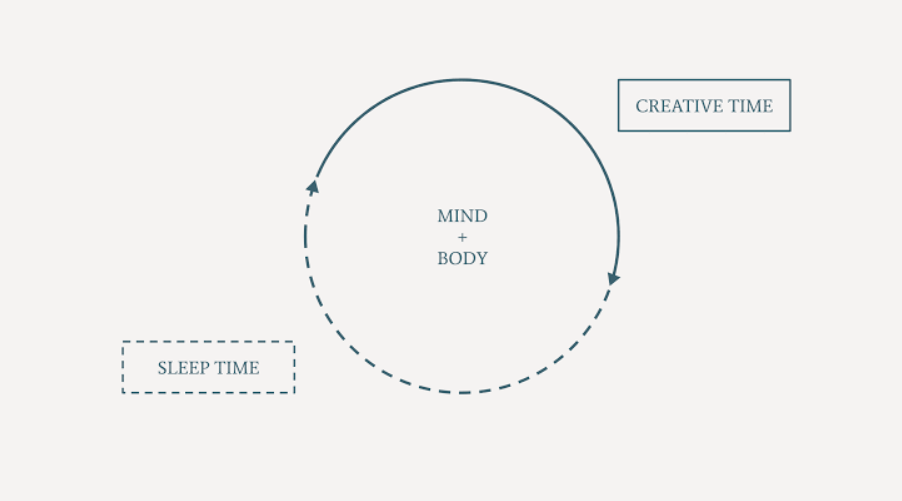
Writing is often treated as something that happens only when we sit down at a desk. We open a document, stare at a blank page, and expect ideas to appear on command. But creative work does not begin when we open our laptops. A large part of it happens while we are away from the page—including while we sleep.
For writers, sleep is not simply time away from the creative process. It is part of the process itself.
Understanding how sleep works can help authors think differently about their routines, their creative energy, and even those moments when an idea suddenly becomes clearer after stepping away from a difficult passage.
The connection between sleep and creative thinking
A writer may spend hours trying to solve a problem in a story: a character does not feel convincing, a chapter lacks direction, or an ending does not quite work.
Sometimes the best solution appears after stopping.
This is one reason sleep can be valuable for creative work. During sleep, the brain continues processing information and experiences from the day. Although sleeping is not a guaranteed creativity machine, giving the brain time away from conscious problem-solving can sometimes help ideas connect in new ways.
That matters particularly for writers because creative work involves combining existing information into new relationships.
A novelist may connect two seemingly unrelated character traits. A nonfiction writer may suddenly see a better structure for an argument. A screenwriter may wake up with a solution to a scene that seemed impossible the night before.
The idea did not necessarily appear from nowhere. The brain had already been working with the material.
Why writers should think beyond “just get more sleep”
It is common to hear that adults should simply sleep more. But sleep is not only about the total number of hours.
Sleep also follows recurring patterns throughout the night. These patterns are commonly described in terms of sleep cycles, with different stages contributing to different aspects of physical and mental restoration.
A typical sleep period moves through stages including lighter sleep, deeper sleep, and REM sleep. These stages repeat throughout the night, although the length and composition of individual cycles can vary.
That variability is important.
A simple 90-minute model can be useful for explaining the concept of sleep cycles, but real human sleep is more complicated. Individual cycles are not always exactly 90 minutes, and they can change during the night and from one person to another.
For writers, the practical lesson is not to treat sleep as a mathematical formula. It is to recognize that consistent, sufficient sleep supports the mental resources required for sustained creative work.
The creative value of a consistent routine
Writing regularly requires more than inspiration.
Authors often work with deadlines, revisions, research, editing, correspondence, and other responsibilities. A chaotic sleep schedule can make it harder to maintain a predictable creative routine.
A consistent bedtime and wake-up time can make the day easier to structure.
For example, a writer might decide that the first two hours after breakfast are reserved for drafting. Another writer might find that late morning is better for research while evenings are better for editing.
The specific schedule matters less than finding a routine that can realistically be maintained.
Sleep can become part of that routine rather than something that gets sacrificed whenever a deadline approaches.
What happens when writers sacrifice sleep for productivity?
Staying up late can create the feeling of gaining extra working hours.
A writer who normally finishes work at 10 p.m. may think that working until 2 a.m. means four additional hours of productivity.
Sometimes that extra time is necessary. But repeatedly reducing sleep can have a cost. Tiredness can affect concentration, attention, memory, and the ability to sustain demanding cognitive work.
There is also a creative problem.
Writing is not simply producing words. It involves making decisions about structure, tone, characters, evidence, pacing, language, and meaning. When mental energy is low, even relatively simple decisions can become more difficult.
This does not mean an author should never work late.
It means that sacrificing sleep should not automatically be considered productive.
Use sleep as part of the writing process
Instead of viewing sleep and writing as competing activities, writers can treat them as parts of the same creative system.
A practical approach might look like this:
1. End difficult work with a clear question.
Before stopping for the night, write down the problem you are trying to solve.
For example: “Why does this character refuse to leave the city?”
2. Step away from the manuscript.
Do something unrelated to writing instead of continuing to force an answer.
3. Sleep normally.
Do not try to manipulate your sleep around a supposed perfect cycle length. Individual sleep patterns vary.
4. Return to the problem later.
When you begin writing again, review the question and see whether a different solution now feels obvious.
Sometimes nothing changes. That is normal. Other times, creating distance from a problem makes the next step easier to see.
Writers can also track their own patterns
Creative routines are highly individual.
One writer may discover that strong ideas appear during morning walks. Another may find that editing is easier in the afternoon. Someone else may notice that their best work happens after several nights of consistent sleep.
Keeping a simple journal can reveal patterns.
You could record:
• When you went to bed
• When you woke up
• How rested you felt
• When you wrote
• What type of work you did
• How focused you felt
• Whether you experienced useful ideas or breakthroughs
After several weeks, patterns may become easier to recognize.
This is more useful than assuming that every writer should follow exactly the same schedule.
The important distinction between a tool and a rule
Sleep calculators and sleep-cycle models can be useful educational tools. They can help people understand how different bedtimes and wake-up times relate to approximate sleep durations.
But they should not be treated as medical instruments or as guarantees of waking up refreshed.
Sleep needs differ by age and individual circumstances, and sleep cycles do not operate like perfectly timed blocks.
For a writer, the most useful question is therefore not:
“What exact minute should I sleep to guarantee perfect creativity?”
A better question is:
“What sleep routine helps me consistently get enough rest so I can do my creative work well?”
That shift removes unnecessary precision and puts the focus where it belongs: building a sustainable creative life.
Creativity needs recovery too
The romantic image of the writer working through the night can be appealing. Stories about authors producing their best work at unusual hours make great anecdotes.
But creative careers are usually built over much longer periods.
A book may take months or years. A first draft becomes a second draft. Research becomes writing. Writing becomes editing. Editing becomes another round of rewriting.
That requires consistency.
Sleep is one part of the recovery that makes consistency possible.
For authors, the goal should not be to find a magical sleep schedule that suddenly produces brilliant ideas. It is to create enough space for both focused work and recovery.
Sometimes the most productive thing a writer can do for tomorrow’s chapter is close today’s laptop and go to sleep.