A bumbling madman in an unholy relationship with the written language. Author of Exile, Magus; Exi...
Friends
Just a quick update to announce the winner of this week.
But first, let’s talk about the campaign. Thanks to your support Bad Medicine is still holding second place in the contest with 107 readers. That is great news but no reason to relax. Contests are unpredictable until the last minute, and you may or may not know that I lost a Nerdist contest by 1 book, I repeat 1 book!!
So I still need your support. Please pre-order, share the love, ask your family and friends to get a copy of this funny and scary book.
And now the big news.

The queen joining the colorful cast of Bad Medicine: Slay it Queen is Miss Booby Von Trapp (AKA Liz Trond)
Booby Von Trapp is a comedy queen with a huge social media following of which she is annoyingly proud!
Congratulations Liz!
Have a great weekend
"We are all born naked, the rest is drag"

Dear friends and followers,
The one thing I’ve learned about deadlines is that they are always closer than they appear. Looking at my calendar, it feels as though all of my time for the rest of the year has been claimed and eaten up by this, that, or the other. Are we on track for the finish and the magical 750? You’ve been generous and you’ve gotten me this far already, but the future is a mystery. I can only hope and pray that any efforts made now will bear fruit in time.
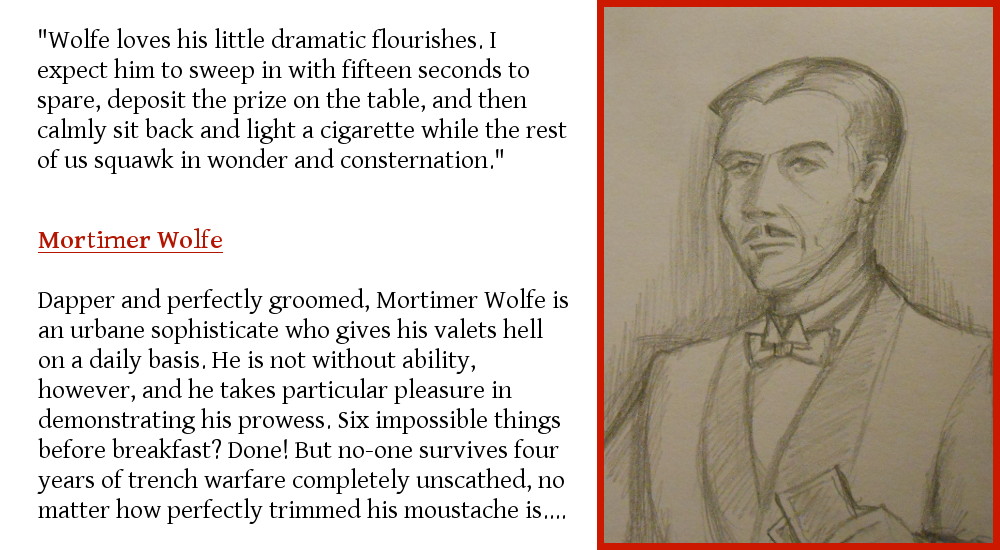
It often feels like an impossibility, but I believe in miracles. And speaking of impossibilities, here’s a look at another one of the characters you’ll meet in "Murder at the Veterans’ Club": Mortimer Wolfe.
It’s Thanksgiving weekend for those of us in Canada, and I plan to be stuffing myself with turkey. I will be remembering in gratitude the support I’ve been given so far. And until we meet again: have fun, and keep reading.
Underdog: 1. One that is expected to lose a contest. 2. One that is at a disadvantage. - American Heritage® Dictionary
Referral giveaway update time, just as a reminder that it is still going on.
To sum up for those of you who haven’t read about it a previous update(about a month or so I think): if Exile, Magus reaches funded status, then I will go through the list of those who have referred the book. Anyone who has also ordered at least 1 copy of Magus themselves(ebook or physical) will have 3 added to their effective total.
The 10 people with the highest effective totals will then be contacted to claim an item from the giveaway pool in order from highest to lowest referrals. In the case of a tie the person who ordered their copy of Magus first will be chosen. Currently I’m in the lead of referrals, but since I’m obviously not eligible that doesn’t matter. First place is only ahead by 1 referral, and 2nd place is something like a 20 way tie last I checked, so it would be easy for anyone to move up the ranks as it were.
Any items in the giveaway pool after the referral portion is decided will then move to a giveaway pool just for those of you who were kind enough to order the book. As I’m trying to add as many items for giveaway as I can, I’m not sure how many items will be left over. If Magus funds I’ll divide everyone who has ordered up as evenly as possible chronologically and roll off(because I love rolling dice) for the remaining prizes. So, for example, if we only hit 250 orders and there were 10 items left over from the referral giveaway, then there would be 10 lists of 25 orders each which I would roll on.
The items currently available for giveaway are:
So as it currently stands there are 21 items available which means 11 would be left over after the referral contest. I’m hoping to scrape together enough money to fund at least 1 more piece of art before this campaign is over, and since I make it a point to get 3 signed prints with each commission that would up the total pool to 24.
As a reminder though, Magus does need to fund before these giveaways happen. As much as I wish I could just do giveaways without regards to funding status, I can’t for practical reasons. Put simply, I plan to get this book out, and while I really do hope this can be done through Inkshares, if it can’t then I’ll likely be going the self-publishing route. If I go the self-publishing route I’ll like have to crowdfund at least a portion of that, and I’ll need the items currently available as part of any crowdfunding effort since my budget couldn’t really support giving them away twice.
The art mentioned above is all viewable on my page, but I’ll also be posting it below. You can check out a bit about "Children of the Wise Oak" on its Amazon page here.
Thanks to everyone for your time and support! Enjoy your weekend, and the art to follow!
Calden Family Crest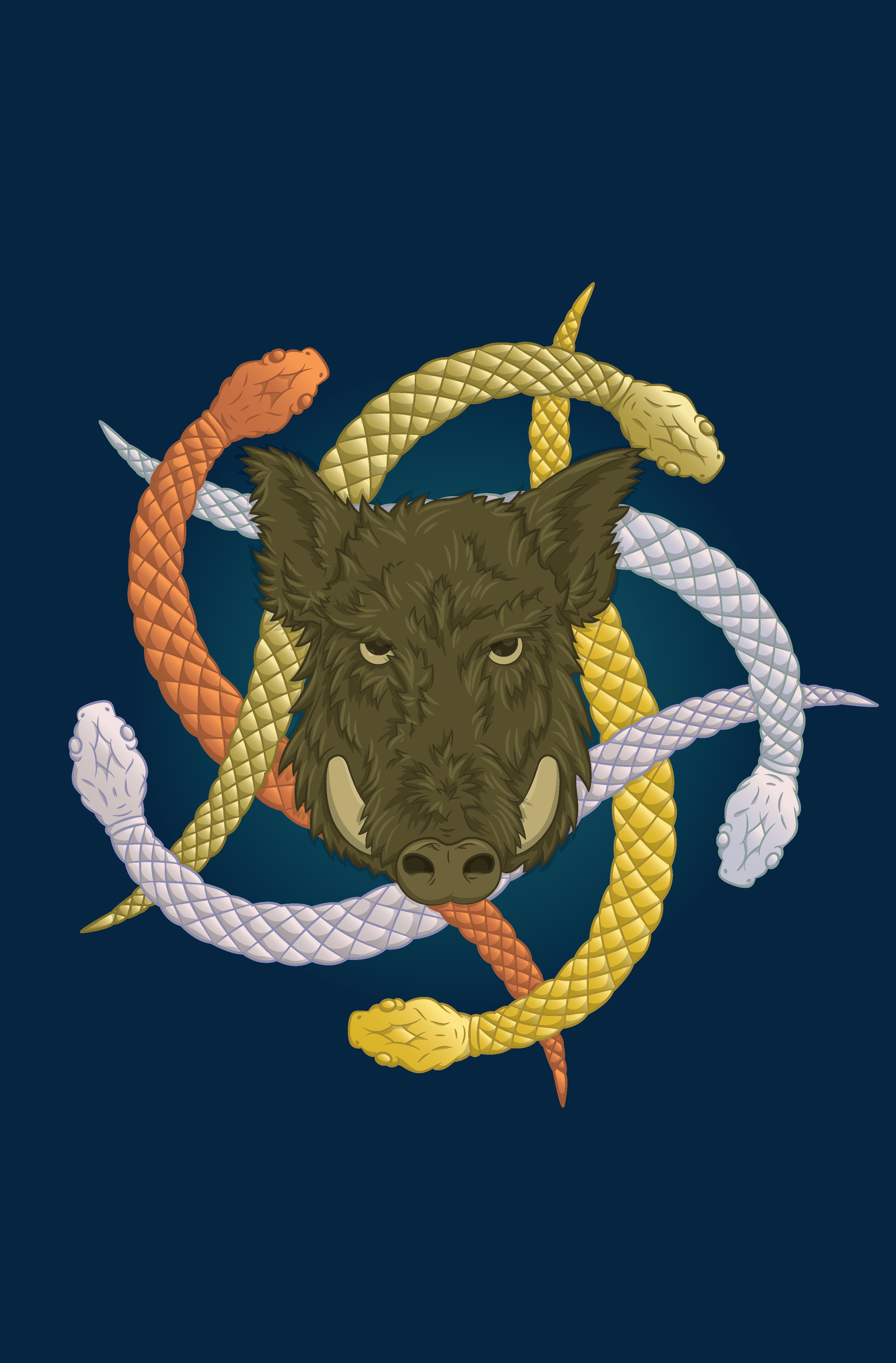
Buscidia vs. the Cog Monster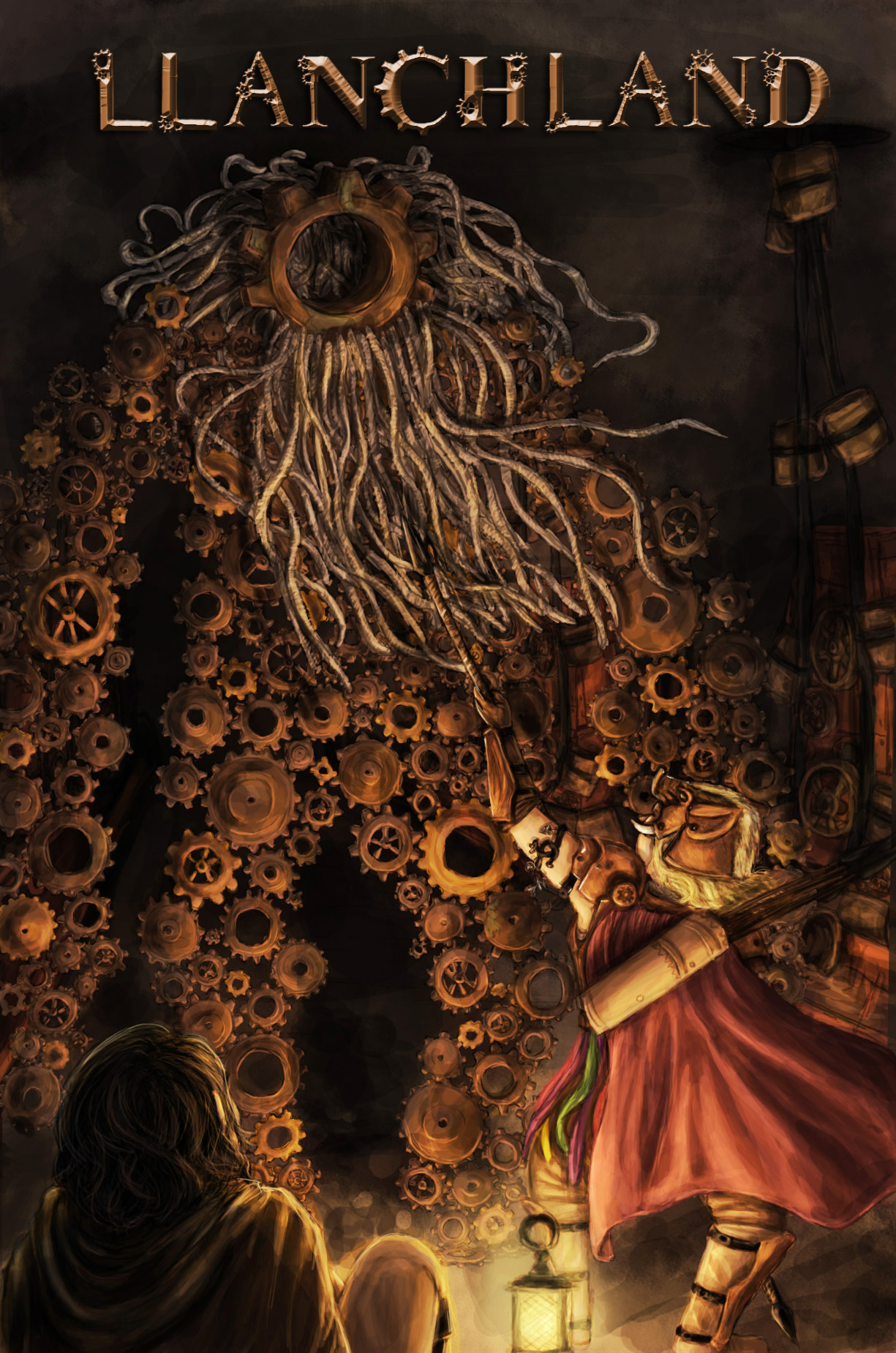
Talari calling wind spirits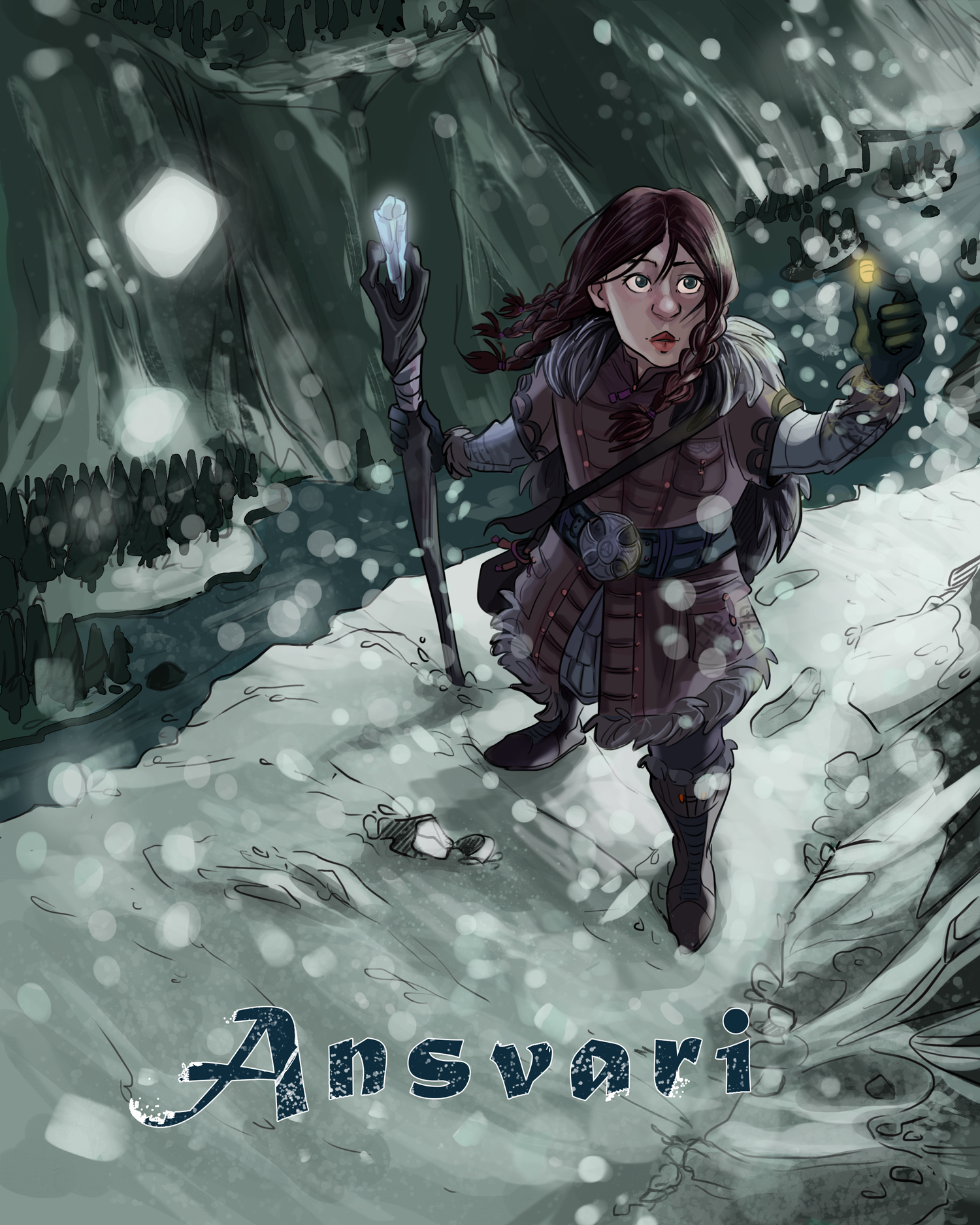

Hello dear readers,
A lot has been going on and that’s kind of why I’ve been rather discreet in my communications. Also, I bet with three contests currently vying for attention, you get enough emails already. So what could possibly have taken up so much of my time?
Let’s start with how I had to do revisions to the manuscript for A God in the Shed. I had already handed it in but after a meeting at WeedRoad Pictures in L.A. a few weeks ago, several ideas to further improve the story demanded to be put to the page.
WeedRoad Pictures? What the hell is that? Well, that’s the second bit of paralyzing news. A God in the Shed has been optioned by Skydance Productions through the help of Akiva Goldsman from WeedRoad (props to Greg Lessans and Alexandra Neil for their part. Amazing people). I can’t do this news justice but you can read the article by The Tracking Board if you want to know more.
 So what does this mean? The short answer? I don’t know! It doesn’t mean that A God in the Shed is going to be a television show but rather that there are efforts behind making that happen. Needless to say that the book is in the hands of some incredibly talented and hard working people. I’m still reeling from the news and gathering the details myself, but as far as excuses for my silence, I think that’s the best I can do right now.
What’s next?
Let me finish this with a heartfelt ‘thank you’ to Adam Gomolin and Brooklyn Weaver who worked like tireless maniacs to make this happen, along with the rest of the Inkshares crew for their support and of course, you guys, the readers, without whom none of this would be possible.
On to the next step!
JF
This guy’s great at the Patience Game!
Why hello everyone! I would like to apprise you of a few minor updates. First and foremost, the book is (and has been) in cue to begin the formal publishing process (line-editing, second readthrough by a professional third party, sizing and formatting, cold readthrough, sending to the printing press, discussing marketing and an ideal release date, etc). It has been for a little while and is, well, progressing. Yay for the game of Hurry Up and Wait!
In the meantime, InkShares has rolled out a general policy wherein, if enough interest is generated at a later date, more good things roll out for the project. Yay! I have also updated the quick blurb at the top of the "Funded" page to better describe the book. If you, dear followers, haven’t checked out the new landing page, I would be honored if this effort was made. The link is here.
If you would prefer not to click on the link, the updated text is as follows:
Surviving abuse leaves no soul unscathed, and this is especially true of Ptielieren, an elite elvish bodyguard involuntarily integrated into an aversive-heavy culture. Strength can exist absent a ringing victory and weakness does not signify defeat.
The word count available for this introductory blurb is truncated but I think it gives a better overview of the content. As always, I love emails and direct messages and am always happy to reply to messages on Facebook. I wish a wonderful day and, to those who celebrate Yom Kippur, may your fast be an easy one.
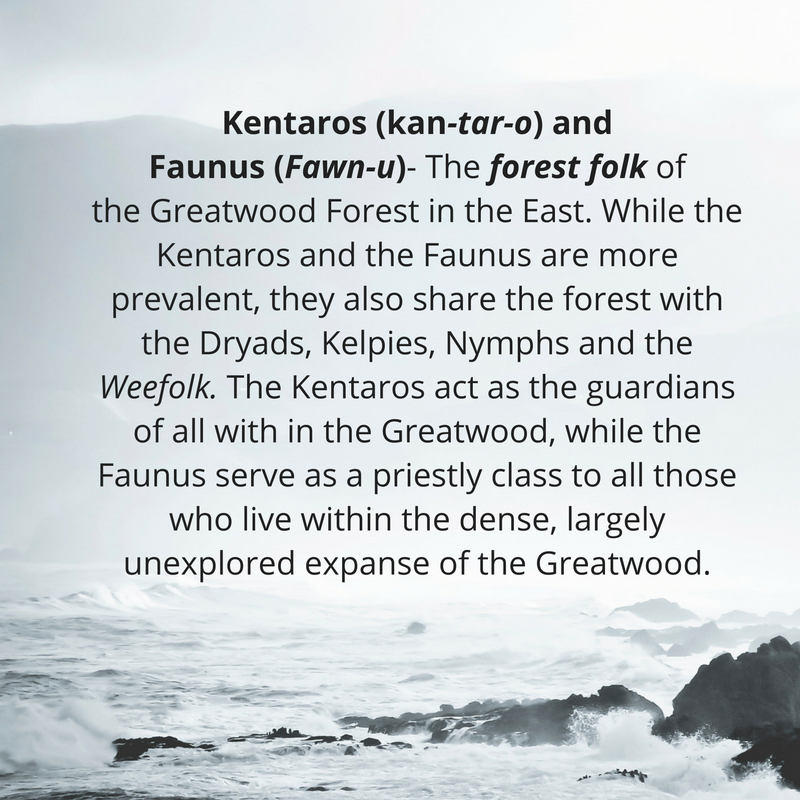
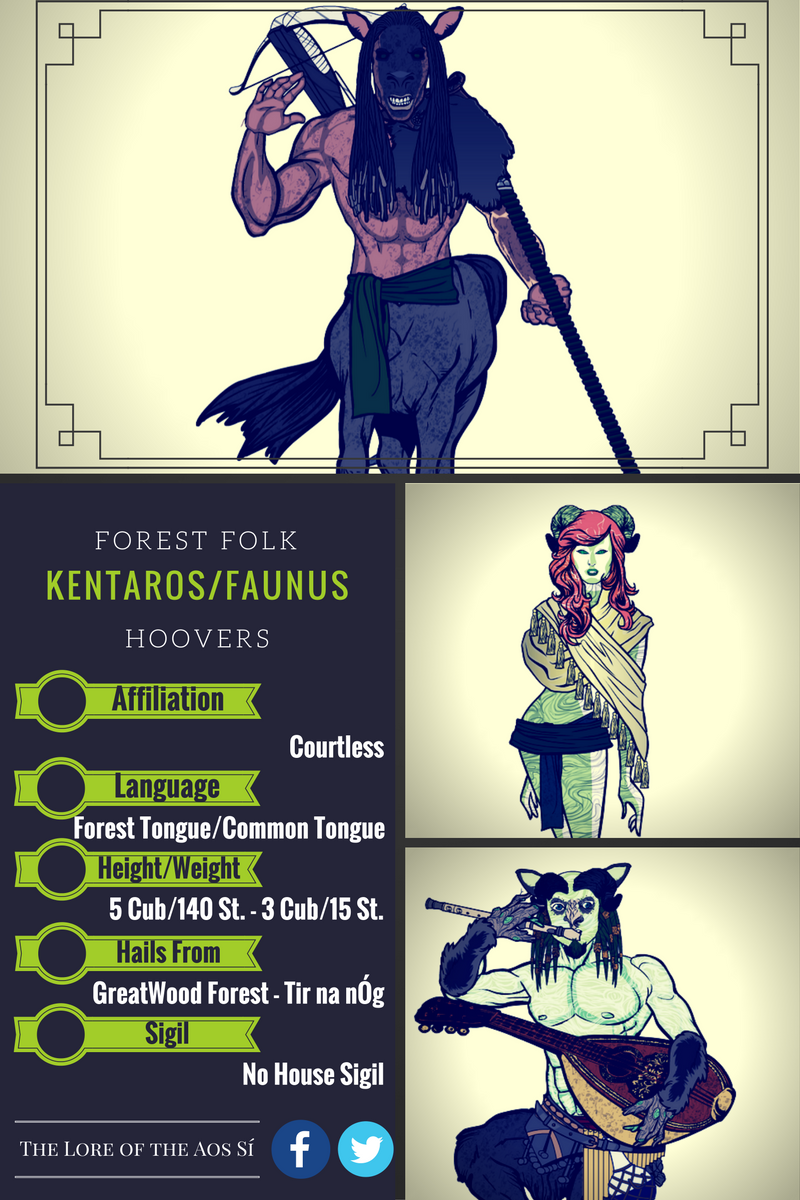
The Kentaros are one of the Courtless races in the realm of Tír na nÓg. Commonly called The Wildfolk, Centaurs, orHorselords, the Kentaros hail from the vast and mysteries Greatwood Forest. The Wildfolk are primarily nomadic and thus, they do not have a settlement to call their capital. The herd is led by the Champion of the Greatwood, who is selected to lead the herd for life through a contest of strength.
The Wildfolk are a primal people, who live in harmony with nature and are rarely seen outside of the Greatwood Forest. They are fierce people, who see themselves as guardians of the Weefolk of Tír na nÓg. The Wildfolk were born of the tempest winds. The Kentaros bear no sigil, but are affiliated with the Courtless peoples of Tír na nÓg.
The Faunus are their cousins. Also of the Courtless races. The Faunus are known for their skill as entertainers and for their intimate relationship with the forests. Although most Faunus reside in the forests of Tír na nÓg, some choose to live in the cities and settlements, the City Faunus are widely known for their skills as musicians and poets. While some are revered most City Faunu are ridiculed for their inability to control their excessive drinking. The Faunus celebrate life daily and give thanks for the abundance of life by gorging themselves on food and drink. This makes them a popular target for the other races.
Forest dwelling Faunus do not fall pray to the same vice as their City kin. Most are seen as shepherds of the forest. They are considered a priestly caste for the Weefolk and those who live within the expanse of the Greatwood. They are sought for their intimate knowledge of the trees with which they share kinship.
Tomorrow, I will go over more of the Weefolk, which encompasses everything from Dryads, to Kelpies, to Pixies, etc, etc.
It’s Friday time!
So, here’s how the week went:
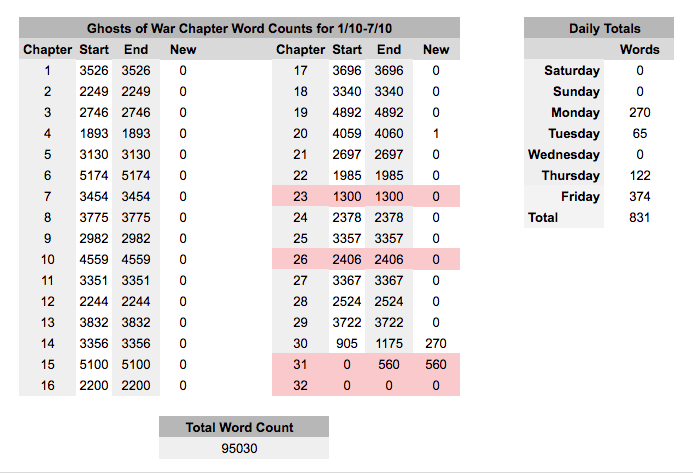
It’s snazzy, and a little slim on the words unfortunately. Things were a little all over the place schedule wise this last week, but next week is looking calmer so ’writing time’ has actually been given allotted hours.
But it’s not all bad, I was able to finish Chapter 30 and get a nice chunk of Chapter 31 done and I went over the 95k threshold. So yes, good progress was made, not much, but it was good. I should be able to finish off 31 this week and maybe 32 as well, they are shorter chapters after all.
Then it’s on to finishing off 23 & 26, which will be a bit more work, 26 might be the longest (and most important) one in the book.
And then it’s on to tidying things up for beta reading time...
See you next week.