Belle Adler liked an update for The Haida Gwaii Lesson

                           YOU’RE PROBABLY WONDERING: WHERE IS MY BOOK ???

Well I made my deadline and was immediately told by Inkshares that production, even of a short simple book with no illustrations (sorry about that) would take about nine months. So I can safely promise you a copy before year end, probably closer to mid year. I hope you’ll find it worth the wait.  

Mark


like · liked by Kyle and 7 others

People who have liked this reader update

    Belle Adler liked an update for The Haida Gwaii Lesson

    When I sent my last update I believed it was impossible to include graphic illustrations with my message. Not true. 

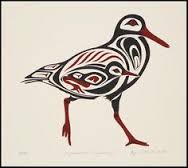
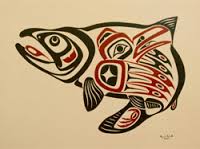
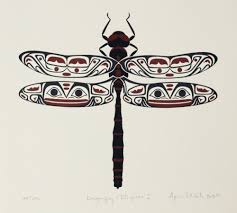
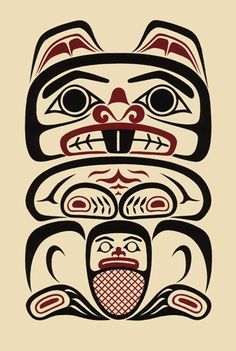
    So here are some samples of serigraphs I would like to have illustrate the book. They are all by the same artist, a Haida woman named Skaana Jaad, who lives in Masset on Graham Island.


    like · liked by joanne and 12 others

    People who have liked this reader update

      Belle Adler liked an update for The Haida Gwaii Lesson

      Dear Readers,

         This morning I sent a brilliantly edited manuscript (thank you Jennifer Sahn) of the book you supported to its publishers at Inkshares. It will now move on to proof, design and then to the printer, soon after which you will have your copy. 

           In the meantime, here’s a teaser: The Preface.

                                                            Why This Book and Why Now 

            I decided to write this book while researching it’s predecessor Conservation Refugees, an investigative history of the hundred year conflict between global conservation and native peoples. Quite frequently, in remote communities around the world, I would be asked by a shaman, elder or chief: “Do you know the Haida?” 

            I had heard of the Haida, and seen their remarkable art in museums. But that was about it. “Why do you ask?” I responded. “Because we want what they have,” was the general response. And by that it turned out they meant “aboriginal title,” a form of land tenure that gives indigenous occupants of a traditional homeland final say over who lives there, who is and is not a citizen of that land, and how and by whom resources will be extracted and used.   

           How did a small remote band of seafaring aboriginals who had lived for millennia on a remote archipelago in the north Pacific get all those things back from a British colony that had usurped them, one by one, in the eighteenth century? 

            This book is the answer to that question. It’s not a simple answer, but I have tried to make it as clear and understandable as possible. Nor was it an easy path for the Haida. It took fifty years of political strategizing, legal maneuvering, alliance building, information gathering, public campaigning, blockading, media manipulation, land use planning and astute negotiation alongside long hours of self-examination, deliberation, historical reassessment, debating, careful planning and finding common cause with rivals. And for the Haida, the struggle ain’t over yet. But they’re a lot closer to their goals than most other indigenous communities around the world. Their story is not only a lesson, it’s an inspiring tale of resilience and determination in the face of two centuries of persistent rudeness, oppression and exploitation. 

                                                                                    *** 

           There is an endless debate amongst historians, anthropologist, journalists and indigenous peoples about what to call the original inhabitants of the New World. “Indians” is insulting to some, as is “Indios” and “Amerindian”. The main problem with “Indian” is that it overlooks the enormous diversity and ignores the true names and wildly differing cultures of native Americans on two continents. “Native” has been coopted by nativists. “Aboriginals” tend to be identified as Australian natives, although aboriginal (literally: “from the origin”) pretty much describes “First Peoples” everywhere, and the word is used quite frequently in international law. “Indigenous peoples” seems to offend no one, but is rarely used for self-description of specific “tribes” or “tribals” (I’ve lost count of how many times I’ve been asked not to use those terms.) 

            Although it is almost exclusively a Canadian term, I use “First Nation(s)” to describe indigenous communities around the world, because no matter where they are, that term pretty much describes what many, although be no means all of them were before contact, a legitimate and sovereign nation that preexisted the arrival and occupation of European settlers. They were there first. Not all of them had laws, a constitution, or what we would today regard as a national government, but they all had land, bordered territories and hunting grounds that, along with a culture, language and a distinct peoples they defined as a “nation.” 

             Another term I’ll use a lot, because Canada does so in most of it’s legal proceedings is “the crown” or “the Crown.” It can mean the state, the federal or provincial government or in early colonial history it can mean the royal place at the capital of an empire or it can literally mean the sovereign imperial monarch who wears the crown — George of Britain, Ferdinand of Spain, Louis of France or Maria of Portugal. However it is defined, “the crown, as I use it, is the power with which First Nations have had to and still have to contend.

                                                                                   *** 

           You will notice that I have used very few proper names in telling this story. That will seem strange to many readers, particularly those who enjoy reading about colorful personalities or have read enough Haida history to know that there were definite heroes, men and women who sacrificed much in their long battle for freedom and self-determination. But I have minimized using names and profiling heroes because the Haida are a profoundly modest and anti-narcissistic culture, and it’s their story that the indigenous world wants to know, a story of collective leadership not individual heroism, of patient determination not celebrity biopics or amusing anecdotes about colorful elders, warriors and hereditary chiefs. This does not mean that they’re aren’t creative, selfless, tireless Haida leaders, who have served faithfully in key positions of power. In fact while traveling the islands and researching this book I found some of the most remarkable people I have ever met. 

            But one of the characteristics that stood out for me about Haida leaders, men and women alike, is that they do not strive for reverence, fame or name recognition. What they do, they do for their community, not just for themselves, their immediate family or historical recognition. As one former Haida Council President observes: “Focusing on the individual is not the Haida way.” OK, I’ll tell you his name. It’s Guujaaw, an affable, mischievous, humorous and brilliant man, a talented artist and drummer, who inspired and shepherded many of the decisive Haida battles of the past half century, and served as President of the Haida Nation from 2000 to 2012. We had two long conversations while I was in Haida Gwaii, one sitting, one walking. I still have cramps in my right hand from taking notes. 

            Of course the Haida are acutely aware of what Guujaaw and other leaders have accomplished, and those men and women are held in high esteem. But their goal is not fame. It is, in a word, independence, which they know is something that cannot be won by one or even a handful of people. It is won by a nation, as the story in this book attests. What the Haida would like the world to know is what they have accomplished … the how of it, not the who. They know that what was said or written or done is more important and relevant to other indigenous peoples than their names and personal stories. 

            So I tell their story as a series of well-timed decisions and actions because it is those events, not the colorful individuals who designed, executed or led them that needs to be understood by native leaders around the world who asked that pressing question: “How did they do it?” 

                                                                                     *** 

       While the Haida created a strategy for self-determination that worked, there are scores, if not hundreds of First Nations around the world for whom these tactics would not be appropriate, at least not yet. Their situations are so dire, so uncertain and their oppressors so aggressive and potentially violent that blockades and litigation would simply be futile, even dangerous. 

            However, there are hundreds, perhaps thousands of indigenous communities, some larger, some smaller, that exist entirely under the sovereignty of a nation state that absorbed them, without consultation, assuming complete tenure and title over their land and licensing its use and extraction of resources to anyone they pleased. It is for them this book is written.                                        

      like · liked by Jeffrey and 9 others

      People who have liked this reader update

        Belle Adler liked an update for The Haida Gwaii Lesson

        You’re probably beginning to wonder where your book is. It’s in rewrite. My brilliant editor has asked for some fairly dramatic changes. And since I agree with most of her ideas I making them. I expect to get the manuscript back to her before the end of this month. Hopefully she will love it and send it on to it’s designer, copy editor, proofreader and libel lawyer. I can’t tell you how long they will take, but I’ve always been surprised at how slow they are. So all I can ask you for is the patience of the Haida, who have waited about ten thousand years for someone to tell this part of their amazing story.

        like · liked by Bonnie and 7 others

        People who have liked this reader update

          Piper Flint followed Belle Adler
          Belle Adler
          An avid reader.
          Follow
          John Robin followed Belle Adler
          Belle Adler
          An avid reader.
          Follow
          Artie Sievers followed Belle Adler
          Belle Adler
          An avid reader.
          Follow
          Belle Adler liked an update for The Haida Gwaii Lesson

          A nice lady walked up to me last week and said: "Our book club is reading your book." "Which one? "  I asked (I've written seven). "The one you're writing," she said. So this update is for her and her club.

          Many of you still refer to Haida Gwaii as "The Queen Charlotte Islands" or "The Charlottes." You really have to stop doing that. This short paragraph from the last chapter explains why.

                  On June 17, 2010 the Haida invited the Premier of British Columbia to visit their islands for a sacred ceremony. He agreed to come and arrived to find a large gathering of the most powerful and respected members of the Haida Nation, all dressed in full ceremonial garb. They had invited him there, they said, to give him something … well to give something back. It was the name “Queen Charlotte Islands” which a British colony had bestowed upon the islands 150 years ago. The name for the entire archipelago would once again be “Haida Gwaii.” And the Haida wanted the Premier to know that they were not renaming the islands or “taking back a name. We’ve always known this place to be Haida Gwaii. We’re giving you back a name given to us by the Crown.” Before the Premier could express his gratitude the President of the Haida Nation added this: “What we are really doing here is unwinding colonialism.”

          like · liked by Christine and 8 others

          People who have liked this reader update

            Belle Adler liked an update for The Haida Gwaii Lesson

                                                      THE ANNUAL HAIDA GWAII BEAR HUNT 

                   Between 1983 and 2013, approximately 1200 Black bears were shot on Haida Gwaii by trophy hunters from around the world. The Haida had always opposed the annual hunt, but the Province of British Columbia, which simply claimed sovereignty over the islands, ignored their protests for thirty years and issued licenses to kill the bears. 

             Most of the hunters were guided to the docile and fearless bears by two outfitters approved by the Province. One permit was held by the owners of the Tlell River Lodge on Graham Island. The other by Pacific Bear Outfitters (PBO). Despite widespread public revulsion for trophy hunting, and research indicating growth opportunities in eco-tourism activities — such as bear viewing in their natural habitat — license owners continued to offer provincially approved “recreational bear hunting,” aka. “trophy hunting” tags. 

             No words were minced on licensee websites. Bear hunters traveling to Haida Gwaii, one site assured, “have a 100% opportunity with about 90% success at taking home a trophy bear.” 

             “It’s a world class animal,” another boasted, “you get a chance of killing a real exceptional old animal.” 

             PBO’s fee for the first bear shot was $9850 (an additional bear could be taken for $4250). But the site stipulated that "trophy fees are paid on all animals shot— whether killed or wounded." 

             All the bears killed or wounded on Haida Gwaii were a rare subspecies (ursus americanus Carlottae), found nowhere else in the world. They are also the largest Black Bear on the planet. UA Carlottae is considered a "keystone species" on the islands because the bears transport salmon remains into surrounding forests of Haida Gwaii, where they fertilize the trees. 

             In 1995, the Council of the Haida Nation passed a resolution at their Annual House of Assembly calling for an end to bear hunting on the Islands. The Province ignored it. Then in February 2004, at a Community Land Planning Forum, sponsored by the Haida Nation and the Province, the President of the Haida Nation restated the Nation’s position:

             “A just-completed economic study on grizzly bear hunting on the central coast shows that guide/outfitters could make more money viewing bears than they can shooting them. The Tlell River Lodge is in a good position to move from hunting to viewing. We ask you to please support the owners of the bear licenses on the Islands in making a transition from recreational hunting to sustainable tourism. Please join our initiative to protect the Haida Gwaii Black bear by sharing your feelings on recreational bear hunting. Send an email from the list below asking the Tlell River Lodge to explore sustainable and locally supported activities.” 

             Thousands of letters and signatures poured into the Lodge and the Province. On September 9, 2013 the British Columbia Ministry of Forests, Lands and Natural Resource Operations closed the black bear hunting season on Haida Gwaii … forever. 

             The former Tlell River Hunting Lodge, now owned and operated by the Haida Nation and renamed Haida House, is the most popular eco-tourism resort on the islands. The Haida do not regard their purchase of the Lodge as a commercial venture. 

            “We’re investing in life,” was their stated motive.           

            like · liked by Kathryn and 12 others

            People who have liked this reader update

              Belle Adler followed The Haida Gwaii Lesson
              The Haida Gwaii Lesson: A Strategic Playbook for Indigenous Sovereignty
              A tale of occupation, resistance and hard-won sovereignty
              More items